GEOFF’s Braised Wild Rabbit Ragù with Pappardelle…
⏱️ Enjoy with your favourite beverage | 5 min read
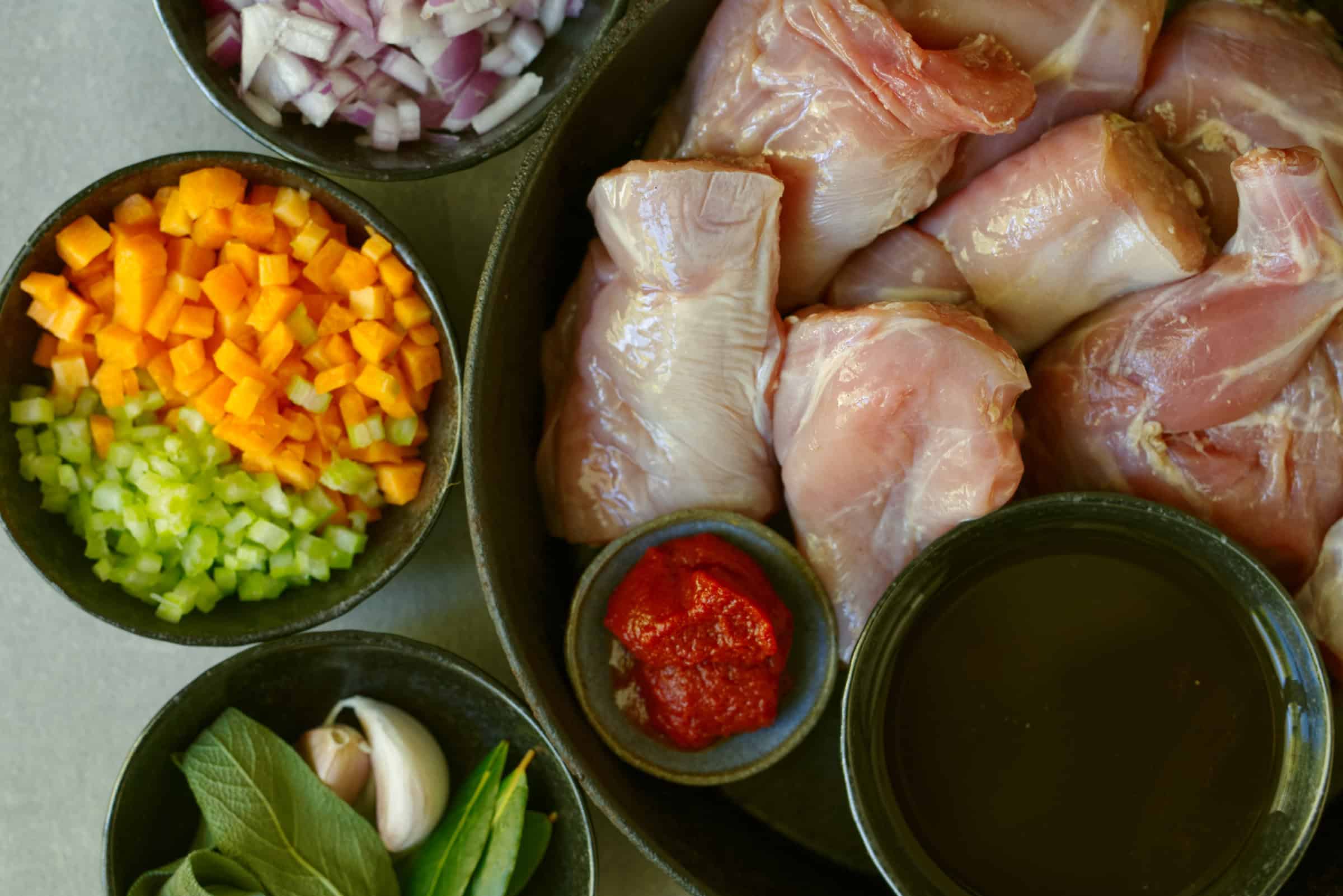
Wild rabbit is the only rabbit you’ll find in Adelaide and Adelaide Hills to buy. They can be hard to get even though it’s not one of the many that our continually eating and tunnelling in our garden. The dish that brought me back to this recipe was eaten with family in a small trattoria east of Rovereto. Rabbit braised white – white wine, sage, rosemary – pulled from the bone and folded through pappardelle with enough cooking liquid to coat each ribbon. I make it with pancetta for the fat base, Bone Roasters veal stock, and a tablespoon of tomato paste for depth without colour. One rabbit gives you enough ragù for a pasta serve and leftover filling for individual pies. Nothing is wasted.
GEOFF’s Braised Wild Rabbit Ragù with Pappardelle…
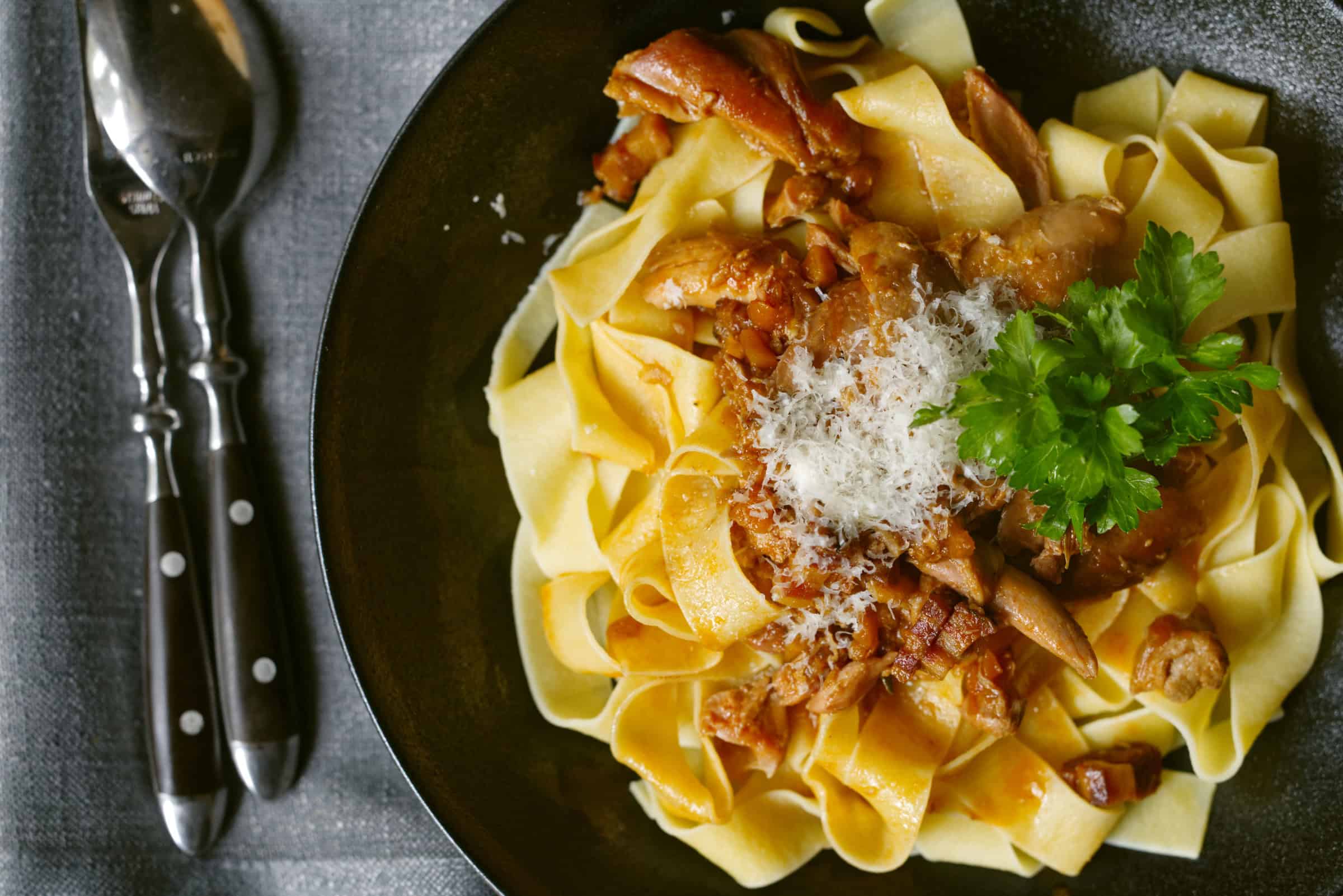
Wild rabbit braised white with pancetta, sage and rosemary until it falls from the bone, then folded through pappardelle with a veal stock ragù reduced until it clings to every ribbon. One rabbit gives a full pasta serve plus filling left over for pies — nothing wasted.
Ingredients
Equipment
Method
- 1. Pat the rabbit pieces dry with paper towel and season well with salt and pepper. Heat the olive oil in a large heavy-based pot or Dutch oven on induction setting 7 (gas medium-high flame). Brown the rabbit pieces in batches, 3-4 minutes per side, until deep golden. Breast pieces will colour faster than legs -watch them and remove first. Set all browned pieces aside on a plate.2. Reduce heat to induction setting 5 (gas medium flame). Add the pancetta and cook for 5-6 minutes, stirring occasionally, until the fat renders out and the edges begin to colour.3. Add the red onion, celery, and carrot. Cook for 8-10 minutes, stirring regularly, until soft and just beginning to colour at the edges.4. Add the garlic, sage, rosemary, and bay leaves. Cook for 1-2 minutes until fragrant.5. Add the tomato paste and stir through. Cook for 2 minutes until it darkens slightly and begins to catch on the base of the pot.6. Pour in the white wine. Scrape up any browned bits from the base and allow the wine to reduce by half, approximately 4-5 minutes.7. Return the rabbit to the pot – legs and saddle first, breast pieces on top. Add the veal stock; it should come about two thirds of the way up the meat. Bring to a gentle simmer on induction setting 3 (gas low flame). Cover and braise for 2 hours, turning the pieces once at the halfway point. Check the breast pieces at 1 hour 15 minutes – once the meat pulls away cleanly, remove them and continue braising the legs and saddle for the remaining time.8. Remove all rabbit pieces and set aside to cool slightly. Discard the herb sprigs and bay leaves. Raise heat to induction setting 6 (gas medium flame) and reduce the braising liquid by one third, approximately 10 minutes, until it coats the back of a spoon.9. Once cool enough to handle, pick all meat from the bones and shred. Discard the bones. Return the shredded meat to the reduced sauce and stir to combine. Taste and adjust seasoning. Set aside the portion for pies to cool completely before refrigerating.10. Bring a large pot of well-salted water to a rolling boil on induction setting 9 (gas high flame). Cook the pappardelle according to packet instructions minus 1 minute. Reserve 100-150ml pasta water before draining.11. Warm the ragù portion for pasta over induction setting 4 (gas low-medium flame). Add the drained pappardelle and toss to coat, adding pasta water a little at a time until the sauce clings to each ribbon. Stir through the extra virgin olive oil.12. Serve in warmed bowls. Spoon extra ragù over the top if you like to show it. Finish with grated Parmigiano Reggiano, flat leaf parsley leaves, and a drizzle of extra virgin olive oil.
Nutrition
Notes
Suggested Servings
- Serve as share platter, or individual mains or a smaller entrée.
- Crusty bread alongside to mop the sauce from the bowl.
- A bitter leaf salad – radicchio or witlof – dressed with lemon and olive oil alongside.
- Wine: a Trentino Pinot Grigio or a light northern Italian red such as Teroldego Rotaliano.
Notes:
- Wild rabbit in Adelaide seems to weigh 800gm-1kg bone-in. I source from Marino Fine Foods in the Adelaide Central Markets and ask your butcher to cut the rabbit into 8 pieces – it makes browning more manageable and keeps the pieces a workable size in the pot.
- Wild rabbit is lean with little connective tissue. Keep the braise at induction setting 3 – small bubbles breaking the surface occasionally, not a rolling boil. Higher heat tightens the meat.
- Breast pieces have no fat or bone to protect them during a long braise. Pull them as soon as the meat releases cleanly from the bone, well before the legs and saddle are done.
- Bone Roasters veal stock (500ml) adds natural body through collagen. Chicken stock works as a substitute but may need a slightly longer reduction to reach the same consistency.
- The reserved ragù makes excellent filling for individual pies with a wholegrain spelt shortcrust base and puff pastry lid – see GEOFF’s Individual Wild Rabbit Ragù Pies…
- Rustichella d’Abruzzo pappardelle holds the ragù well – the width and texture of the ribbon grip the sauce without it slipping off.
- Ragù keeps in a sealed glass container for up to 3 days. Store the pie portion separately.
- Cooked pasta does not store well – cook fresh pappardelle for each serve and reheat the ragù to combine.
- Reheat ragù: steam oven at 85°C, 100% steam for 8-10 minutes. Conventional oven at 160°C Fan Plus for 12-15 minutes covered with foil. Stovetop on induction setting 3 (gas low flame) with a splash of water or stock.
- Ragù freezes well for up to 3 months. Portion before freezing to suit intended use – pasta serves and pie filling separately.
- Thaw overnight in the fridge. Reheat from frozen: steam oven at 85°C, 100% steam for 18–20 minutes. Conventional oven at 160°C Fan Plus for 25 minutes covered with foil.
- Do not freeze cooked pasta.