
Tools of the Trade | Essential Kitchen Tools for Baking at Home
Just as a sculptor doesn’t need every chisel to create something beautiful, a home baker doesn’t need every gadget to master sourdough, pastries, or cakes. With a handful of thoughtfully chosen utensils, it’s possible to bake everything from crusty artisan loaves to delicate laminated pastry, confidently and consistently. Whether you’re working on a weeknight loaf or a special weekend tart, the key lies in technique, temperature control, and the right tools for the job – not in crowding your drawers with clutter.
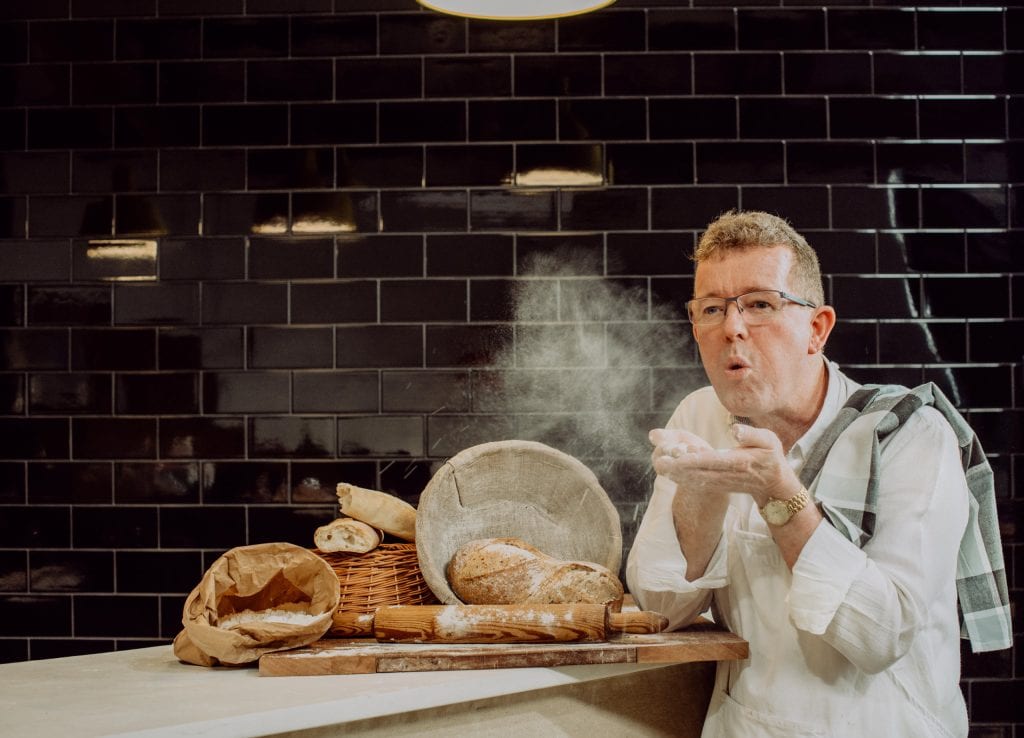
Measuring: Precision Before Everything
Baking is chemistry, and chemistry demands accuracy. Digital scales are non-negotiable -weighing in grams eliminates variables. A cup of flour can vary by 30 grams depending on how it’s measured. That’s the difference between perfect pastry and failure.
Critical detail: an Australian tablespoon equals 20ml whilst a US and English tablespoon equals 15-18ml respectively. This matters significantly in baking. Always check where your recipe originates.
Baker’s percentages liberate you from recipes. Every ingredient becomes a ratio relative to flour weight. My sourdough uses 78% hydration, 2% salt, 20% levain – that ratio works whether I’m making 500 grams or five kilograms.
Mixing and Kneading: Where Texture Begins
Stand mixer: Not essential, but transformative for yeasted and enriched doughs. The weight matters (stand mixer) 7-9 kilograms means it won’t walk across the bench. Attachments matter: paddle for creaming, dough hook for bread, whisk for meringues.
Bench scraper: Metal for cutting dough and cleaning surfaces. Plastic for folding sourdough and handling sticky doughs without adding excess flour.
Silicone spatulas: Modern silicone cleans perfectly, handles high temperatures, folds delicate batters without deflating them.
Rolling and Shaping: Control Without Force
Rolling pin: French-style tapered pins for delicate work. Heavy wooden or marble pins for yeasted doughs. I prefer wooden – the slight texture prevents sticking without excess flour.
Baking paper and silicone mats: Rolling pastry between these eliminates excess flour that toughens pastry. Mats transfer easily to and from the fridge. I use Silpat for most baking – they last years.
Pastry brush: Natural bristles for brushing off flour. Silicone for egg washes, butter, glazes. Silicone cleans perfectly with no residual taste or colour.
Proofing and Rising: Patience Rewarded
Proofing baskets (bannetons): Support dough structure during final proof. The spiral pattern on artisan loaves comes from these baskets. I prefer unlined for the flour pattern they leave on the crust.
Couche (proofing cloth): Heavy linen supports baguettes and batards. You form folds in the fabric, arrange dough between. The cloth absorbs surface moisture, creating proper crust development.
Scoring and Finishing: The Final Touch
Bread lame: A baker’s blade for scoring dough. Those dramatic ‘ears’ on artisan bread come from proper scoring technique and blade angle.
Pastry wheel and cutters: Fluted wheels create professional lattices. Round cutters for tarts, biscuits, scones. Tart rings in various sizes for everything from tartlets to rectangular tarts.
Offset spatulas: For spreading ganache, smoothing batters, loosening cakes from tins, applying frostings.
Baking Vessels: Shape and Heat Distribution
Cast iron Dutch oven: For sourdough, this creates the steam environment professional ovens provide. Preheat to 250°C, transfer dough, cover with lid. Trapped steam creates oven spring and crust development.
Tart tins and rings: Loose-bottom tins for easy removal. Patissière rings sit on baking sheets, creating clean edges. I have rounds from 10cm to 28cm, rectangles, individual tartlet rings.
Baking sheets: Heavy-gauge aluminium conducts heat evenly without warping. I have six half-sheets – enough to proof and bake continuously.
Temperature Control: Precision Over Guesswork
Oven thermometer: Your oven’s temperature dial lies. Most average and old home ovens fluctuate by 10-15°C. I use Miele and there is a plus/minus 1°C variation. An oven thermometer tells you what’s actually happening.
Instant-read thermometer: Bread is done at 95-98°C internal temperature. Enriched doughs at 88-90°C. Custards at 82°C. Knowing these numbers eliminates guesswork.
A Combi or Moisture Plus oven: These transform home baking, particularly for bread and pastries. Precise steam injection creates professional crust development. I use my Miele steam oven constantly – it’s about understanding what steam actually does to dough.
Global Baking, Minimal Tools
Different baking traditions highlight different techniques, but a small set of versatile utensils covers wide ground. French: rolling pins, tart rings, pastry brushes for delicate pastries. German: heavy bread tins, understanding of whole-grain fermentation. Italian: pizza stones, understanding of high-hydration doughs. You don’t need specialised equipment from every tradition – just understand the principles.
Your Home Baking Kit: A Practical Checklist
Start with these to cover most weeknight and weekend baking: digital scales (0.1-gram precision), stand mixer (optional but valuable), bench scrapers (metal and plastic), silicone spatulas, rolling pin, baking paper and silicone mats, proofing basket, bread lame, cast iron Dutch oven, instant-read thermometer, baking sheets, tart tins and rings, pastry brush, offset spatulas.
Final Thoughts: Small Tools, Big Impact
Baking well doesn’t mean baking fancy – it means understanding hydration, fermentation timing, and how to work with the tools you’ve got. A good scale, proper measuring technique, and a reliable thermometer can take you from guesswork to consistency. Mastering sourdough is less about following recipes and more about recognising dough development, managing temperature, and understanding what your starter is telling you – what some bakers call the 70-80% observational method.
So, what’s your go-to baking project for busy weeknights? Do you lean towards the simplicity of no-knead breads or chase the satisfaction that comes from proper laminated pastry? Have you given baker’s percentages a go, or are you still measuring by volume? Let me know – I’d love to hear about your baking discoveries.
Follow my journey at AncientGrains63 as I explore how proper technique and precision can turn simple ingredients into consistently excellent baked goods that become part of everyday cooking.