GEOFF’s Pan-Seared Kingfish, Silver Trevally, Blue Eye Trevalla, Barramundi or Murray Cod…
The teppanyaki plate changed how I cook fish at home. The flat surface distributes heat evenly across the whole fillet, and combined with a chef’s press held down for the full cook, the skin stays in continuous contact and renders rather than steams. There are two other reasons I come back to the teppanyaki plate for fish. The low, flat edge means I can slip a fish slice or spatula cleanly under the fillet from any angle without having to fight the sides of a frypan – no awkward tilting, no fillet breaking on the way out. And the surface area means I can cook four full portions at once, or run half a side if I’m cooking for a crowd. Centre cut is what I ask for because the even thickness means the flesh cooks at the same rate end to end – though a whole fillet works too, with a little more attention to the thinner tail end. The overnight wire rack in the fridge is the other thing I won’t skip. This method works across all fish. The sauce recipes are separate – see GEOFF’s Provençal Sauce and GEOFF’s Saffron, Leek and Cream Sauce.
GEOFF’s Pan-Seared Kingfish, Silver Trevally, Blue Eye Trevalla, Barramundi or Murray Cod…
Ingredients
Equipment
Method
- 1. The day before (if time allows): Store fillets uncovered on a wire rack over a tray in the fridge overnight. This dries the surface of the skin and concentrates the flesh – the difference in the pan is noticeable. If overnight isn’t possible, 1-2 hours uncovered in the fridge is still worthwhile.2. Warm the teppanyaki plate or heavy-based pan on induction setting 5 (medium gas flame).Two minutes before you are ready to cook, boost to setting 7 (high gas flame).The surface should be properly hot before the fish goes on – a drop of water should skitter and evaporate on contact. Add just enough oil to coat the surface. Starting the pan first means it is at temperature by the time the fish is prepped and ready.3. Remove fillets from the fridge 20 minutes before cooking. Pat each portion completely dry with paper towel. Run a sharp knife firmly along the skin from head to tail in one clean stroke to remove the smear layer – the thin film of surface moisture that would otherwise work against a crisp result in the pan. Just before placing on the teppanyaki plate, coat the skin side lightly with oil and season with fine sea salt.4. Lay each portion skin-side down and reduce to induction setting 5 (medium gas flame)immediately. Place a chef’s press – or a second frypan pressed flat across the fillets – on each portion and hold for a couple of minutes. The press keeps the skin in continuous contact with the surface so it renders evenly without lifting.5. Cook skin-side down for 5-7 minutes, watching the side of each portion. When the opaque flesh has crept approximately 80% of the way up from the base, the fillet is ready. Use this as your guide, not the clock – fillet thickness is the real variable. For a whole fillet, watch the thickest section and let the thinner tail end look after itself.6. Stovetop finish: Switch off the induction. Turn the fillet over onto the flesh side and allow the residual heat in the plate to finish the cook. Rest 2 minutes skin-side up on a warm plate before plating onto the sauce.7. Oven finish(family cooking, alongside roast vegetables): Start skin-side down on the teppanyaki plate on induction setting 5 for 4-5 minutes until the skin is set and beginning to colour, then transfer to the oven preheated to 180°C Fan Plus, shelf position 2, skin-side up. Around 5 minutes is a starting point – watch the fillet rather than the timer. Thickness is the real variable. The fillet is ready when it yields slightly to gentle pressure at the thickest point. Rest 2 minutes before plating.
Nutrition
Notes
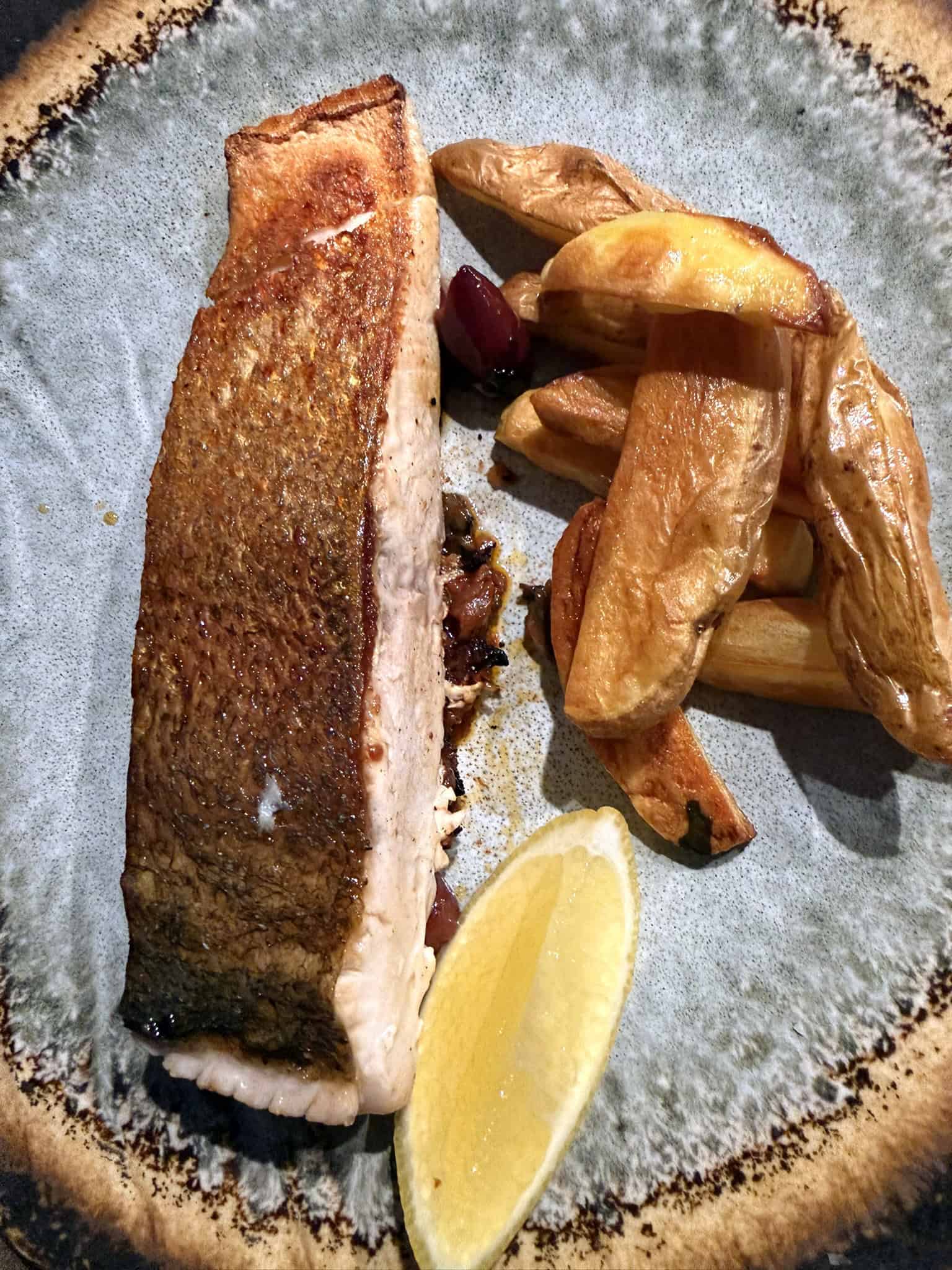
- Pool your chosen sauce into a wide shallow bowl or warmed plate and sit the fillet on top skin-side up – see GEOFF’s Provençal Sauce or GEOFF’s Saffron, Leek and Cream Sauce.
- Skin-on potato chips roasted at 200°C Fan Plus or Fan Grill alongside are a natural match with either sauce.
- Steamed broccolini or asparagus from the steam oven at 100°C for 5-6 minutes works well if you want something lighter on the plate.
- A lemon wedge on the side lets you brighten the plate to taste at the table.
- Kingfish is the oiliest of the five and handles acidic sauces well – tomato, verjuice, olives. The Provençal is the natural match.
- Silver trevally has enough fat to carry a robust sauce and enough delicacy that the flavour of the fish comes through on the finish. Tested against the Provençal – a good match. A whole fillet works well; give the thinner tail end slightly less time under the press.
- Blue eye trevalla is neutral in flavour and more delicate. It picks up the saffron, leek and cream sauce without being overpowered.
- Barramundi has the sweetest flesh of the five and works well with either sauce. The skin is thicker than the others – the chef’s press is particularly important here to prevent lifting.
- Murray Cod is a rich, moist freshwater fish with good fat content – similar in weight and texture to barramundi. It pairs well with both sauces. Source from sustainable aquaculture where possible.
- Skin crisping: the overnight wire rack dry makes the biggest single difference. Beyond that – dry the fillet, scrape the smear layer, start the pan before you prep the fish, press for the full cook, don’t move it.
- Cooked fish refrigerates for up to 1 day. Reheat in the steam oven at 85°C for 6-8 minutes – the gentlest method and closest to fresh.
- Alternatively, Miele Combi Steam at 120°C with 70% moisture for 10-12 minutes. The skin will not re-crisp after storage.
- Raw portions can be frozen individually, wrapped tightly, for up to 2 months.
- Thaw overnight in the fridge on a wire rack (uncovered where possible). Do not freeze cooked fish.