
Pan Searing Seafood | Everyday Excellence with Fair Seafood’s Traceable Catch
There’s a pattern I’ve noticed in the people who consistently cook fish well at home they stop following the clock and start watching the fish. That shift, from recipe-follower to attentive cook, is where weeknight pan searing goes from inconsistent to reliable. It’s not about technique complexity. It’s about understanding what’s actually happening in the pan.
Weeknight pan searing comes down to two things: understanding fish texture and managing heat. When I’m cooking a skinless barramundi fillet, controlled medium heat creates a golden crust whilst keeping the interior at around 60°C. The beauty of skinless fillets lies in their speed and moisture retention – ideal for a Tuesday night when dinner needs to be on the family table without drama.
Understanding Fish Texture and Pan Heat
Successful pan searing starts with matching different fish textures to the appropriate heat level. I think about it in four broad groups, and knowing which group your fish sits in is the most useful single piece of knowledge you can carry into the kitchen.
Delicate and flaky varieties – sardines, sand whiting, and Ōra King salmon – need gentle to medium heat with careful temperature control. Target 52-55°C internal. These are unforgiving fish that tell you immediately when something has gone wrong, and they’re worth treating with respect.
Delicate to medium textured fish – Coorong mullet, southern garfish, and red mullet – handle medium heat with attentive monitoring. Target 55–57°C. These work beautifully as fillets or small whole fish and represent outstanding value from Fair Seafood.
Medium textured varieties – Tommy ruff, Australian salmon, barramundi, flathead, and coral trout – are where most home cooks find their confidence. Target 57-60°C. These prove forgiving with medium to medium-high heat, developing excellent caramelisation whilst maintaining moisture.
Medium to firm fish – Murray cod, nannygai, gurnard, kingfish, snapper, and ling – excel with higher heat applications. Target 60-63°C. Their denser structure creates beautiful crusts whilst staying perfectly cooked within.
Equipment and Heat Management
Pan searing equipment ranges from traditional cast iron and stainless-steel pans to modern induction-compatible cookware. Teppanyaki plates (which I use) offer exceptional versatility – whole butterflied fish or longer specimens like southern garfish can cook without crowding, something a standard round pan simply can’t manage.
Heat control is critical for consistent results. Proper preheating ensures the fish sears the moment it contacts the pan surface. The pan should be hot enough that a drop of water dances and evaporates immediately, but not so hot that oil begins smoking excessively. That’s the window you’re working in, and learning to recognise it by sight and sound is part of building the technique.
The 80% Method: Visual Mastery
The most reliable technique I’ve found is what I think of as the 80% method. Watch the flesh change colour from translucent to opaque, creeping up from the bottom of the fillet — and turn the fish over just before that colour change reaches the 80% mark. The range of cooking time is broader than most people expect: a sardine fillet can be done in under 90 seconds, whilst a thick centre cut barramundi will take 10-12 minutes in the pan. The visual method accounts for this automatically, which is why it’s more reliable than any timer.
When the opaque colour is approaching three-quarters of the way up the side of the fillet or centre cut, turn it over and switch off the heat source. The remaining cooking completes through residual heat in the pan – and turning slightly early is deliberate, not a mistake.
The visual cues are straightforward once you’ve seen them a few times. Underdone fish has a translucent centre and a raw appearance. Perfectly done fish is just opaque throughout, moist, and flakes cleanly. Overdone fish shows white protein seeping at the surface, a dry texture, and probably a rubbery texture.
Temperature Control and Carry-Over
Remove fish from heat 2-5°C below your target temperature depending on thickness – this is where the 80% method does its quiet work. Restaurant kitchens rely on carry-over cooking deliberately: fish comes off the heat well before it’s finished, rests on a warm plate or rack, and the residual heat in the flesh completes the job. There’s no magic to it, just an understanding that the cooking doesn’t stop the moment the pan does. Replicating this at home is straightforward – rest thicker cuts two to three minutes before serving on warm plates to maintain temperature without overcooking.
Watch for white protein seeping from the flesh. This signals overcooking: proteins are contracting and expelling moisture. If you see it, you’ve gone too far. Adjust earlier next time. It’s a learning cue, not a catastrophe.
Cut Selection and Technique
Different cuts require slightly different approaches, though the underlying principles remain consistent across all of them.
Fillets: Skin-on fillets create excellent crispy skin when cooked properly. Before they go in the pan, I run the back of a knife firmly along the skin to remove the smear layer – the thin membrane of moisture and protein sitting on the surface. This simple step makes an immediate difference to how the skin crisps. Skinless fillets cook faster and suit quick weeknight preparations. Both benefit from the same foundational preparation – pat completely dry and bring to room temperature for even cooking.
Centre cuts: These provide a restaurant-quality presentation for weeknight meals. Uniform thickness ensures consistent temperature throughout. Thicker cuts may require a brief oven finish at 160°C.
Whole fish: Smaller varieties like sand whiting or Australian salmon work well in large pans or on teppanyaki plates. Score the skin diagonally to prevent curling and ensure even heat penetration.
Butterflied fish: Exposes maximum surface area to pan heat, reducing cooking time whilst creating excellent caramelisation. This works particularly well for medium-textured fish like rainbow trout.
Cost-Conscious Weeknight Approach
Pan searing elevates fish across all price points, which is one of the things I appreciate most about the technique. Everyday options like sand whiting, Coorong mullet, and Tommy ruff deliver exceptional flavour at accessible prices. Mid-range choices like barramundi, flathead, and coral trout step up the occasion. Premium selections like Ōra King salmon transform an ordinary Tuesday night into something genuinely memorable.
The technique remains consistent regardless of price point. Proper heat management and the 80% method work equally well with budget-friendly sardines or a premium Ōra King salmon centre cut. The fish changes; the discipline doesn’t.
Cuisine Versatility in the Pan
What I enjoy about weeknight pan searing is how the same technique adapts across completely different flavour directions without requiring a different set of skills.
Japanese: Premium fish like Ōra King salmon responds beautifully to minimalist treatment. A light dusting of potato starch creates remarkable crispy skin whilst maintaining a silky interior. Finish with soy, mirin, and fresh ginger.
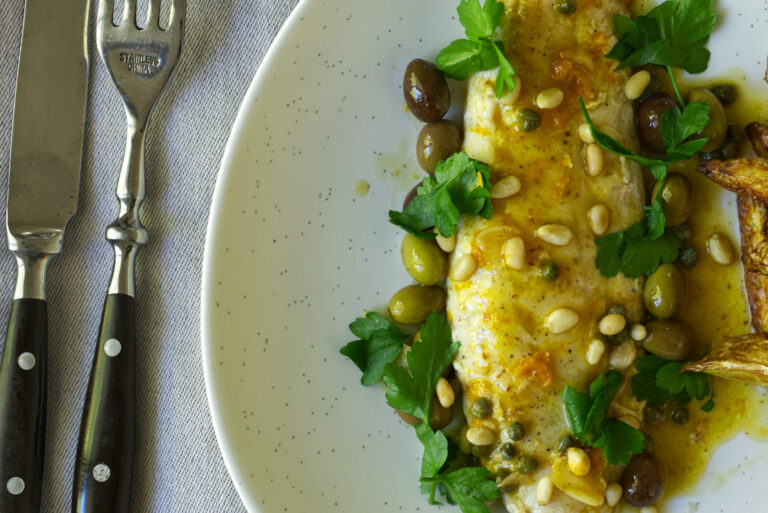
Mediterranean: Barramundi and other medium-firm fish shine with quality olive oil, sea salt, and fresh herbs. The focus is achieving a golden crust whilst maintaining a moist interior – simple food honestly presented well.
Thai: Quick marinades with fish sauce, lime juice, and palm sugar work beautifully with coral trout or flathead for weeknight variety.
North African: Ground cumin, coriander, cinnamon, paprika, and cayenne add real complexity without extra time at the stove.
The Teppanyaki Advantage
A teppanyaki plate changes weeknight pan searing by providing a large, even cooking surface that a standard pan can’t replicate. Cook fish alongside vegetables for complete one-pan meals. The flat surface ensures consistent heat distribution across butterflied whole fish or multiple fillets simultaneously – particularly useful when cooking for more than two.
Those working with traditional round pans can achieve similar results by working in batches. Cast iron retains heat excellently for consistent searing. Stainless steel develops excellent fond for pan sauce creation. Both have a genuine place depending on what you’re cooking and what you’re after.
Building Your Confidence
Success comes from understanding the relationship between fish texture, heat application, and the colour change that tells you when to turn. Start with forgiving medium-firm varieties like barramundi fillets, mastering those visual cues before progressing to more delicate species. The technique builds on itself.
I remain convinced that by staying curious and open-minded, by showing a willingness to learn and move beyond your comfort zone, it will help improve the chances of understanding what it is you’re trying to achieve in the pan. Mistakes teach as much as the successes – probably more, if you’re paying attention.
These techniques work whether you’re on induction, gas, or finishing in an oven. The equipment helps; the understanding comes first.
Common Mistakes Worth Knowing
Overcooking: Turn the fish over before the colour change reaches 80% and remove from heat 2-5°C below target temperature.
Sticking: Ensure proper preheating and avoid moving the fish prematurely. The fish will release when it’s ready.
Uneven cooking: Bring fish to room temperature and pat it completely dry before it goes in the pan.
Lack of colour development: Proper seasoning and adequate heat are both required for the browning reactions that create flavour. Neither alone is enough.
Weeknight pan searing rewards consistency over complexity. Master the fundamentals – proper heat, the 80% method, and temperature awareness – and apply them regardless of fish variety or cuisine direction.
What’s your favourite seafood choice for busy weeknights? Do you prefer the convenience of skinless fillets or the flavour of skin-on preparations? Have you tried the 80% method for knowing when to turn? Let me know below – I’d love to hear about your discoveries.
Follow my journey at AncientGrains63 as I explore making quality seafood part of quick, reliable weeknight cooking through proper technique and temperature control.
#PanSearedSeafood #WeekNightDinner #TemperatureControl #SeafoodTechnique #AustralianSeafood #FairSeafood #CookingTechnique #AdelaideFood #SustainableSeafood