The Gentle Constraint | What Steam Can Do That Fire Simply Cannot
At a Miele masterclass, I watched Ōra King salmon cooked at 55°C for forty-five minutes and came out the other side with something I’d never produced in a pan. The texture was silky in a way that high heat doesn’t permit – almost custard-like, the natural oils coating the palate rather than being driven out. That was another sliding door moment with knife, fork, and spoon: understanding that texture isn’t just about doneness, it’s about the path you take to get there. That session reframed how I think about steam entirely.
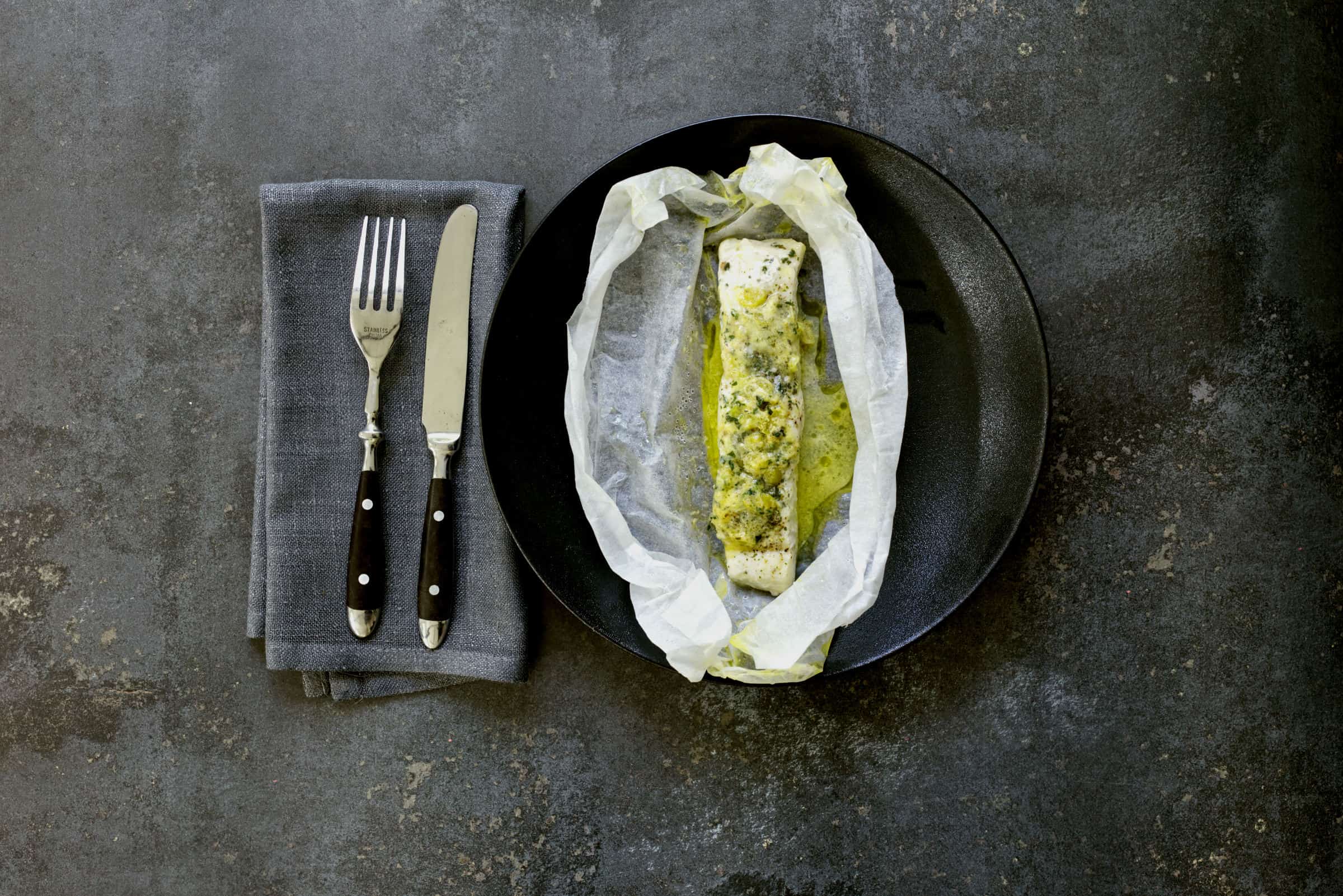
Since then I’ve used steam for a broad range of cooking – fish fillets on a perforated tray with nothing but salt and white pepper, stocks at 90°C, vacuum-sealed fillets with aromatics infusing under pressure through the cook, and sometimes finishing with a flash sear to bring back the textural contrast that gentle heat removes. The bronze whaler parcel I made recently with urchin butter, lemon myrtle and finger lime was the sealed-paper version of that same logic: hold the aromatics against the fish for the entire cook, open it at the table.
One Variable
The steam oven offers something a stovetop cannot: a fixed environment. Set one temperature and that is what everything inside sits in for the entire cook. I run fish stock and crustacean stock at 90°C for this reason – very little fat rises to the surface, no need to stand over it skimming. The oven holds the condition; the stock clarifies itself. The same principle applies to fish.
At 50-60°C, proteins set slowly and gently – the silk zone, where the result looks almost translucent but the texture is unlike anything a hot pan produces. At 70-80°C, fish becomes opaque and tender, the reliable everyday result. At 90-95°C the flesh firms noticeably, useful for whole fish or anything going cold into a salad where structure matters. Three different outcomes from the same technique, separated only by temperature.
It is also passive cooking in a way stovetop work is not. Set the temperature, place the fish, attend to something else. One fillet or twelve, the timing is the same the oven doesn’t care how much is on the tray. That consistency is useful on any night, and particularly so when you’re cooking for a table of people and would rather not be monitoring a pan. A reliable instant-read thermometer matters here more than any timer: temperature, not time, determines the result, and every oven runs slightly differently.
Pressure Infusion and the Sealed Environment
For delicate fish like Ōra King salmon, I vacuum-seal the fillet before it goes into the steam oven. This is not sous vide – there is no water immersion. The steam oven’s humidity and temperature control do the work, and the sealed bag serves a different purpose: it protects the flesh from direct steam contact, keeps the natural juices with the fish, and forces whatever aromatics are in the bag into the flesh under pressure for the duration of the cook. A drizzle of good olive oil, fresh dill, perhaps a strip of yuzu peel or a thin slice of ginger – nothing that goes in disperses. When the bag opens, the aroma is concentrated in a way an open tray never produces.
The texture from this method is also distinct. Even perfect pan-searing creates a gradient – firmer at the surface, tender inside. Vacuum-sealed steaming produces edge-to-edge consistency, the same silky texture throughout, because the heat reaches every part of the fillet at the same rate through the same medium.
The baking paper parcel follows the same logic but without the equipment. It is an older sealing method, but the principle – hold the aromatics against the fish, prevent them dispersing into the oven – is identical. For the bronze whaler, the urchin butter, lemon myrtle and finger lime zested from frozen overtop the butter before sealing were the flavour environment. At 85°C for twelve minutes, the butter melts through the parcel slowly. When the paper opens at the table, the citrus and lemon myrtle lift immediately.
The Fish on the Day
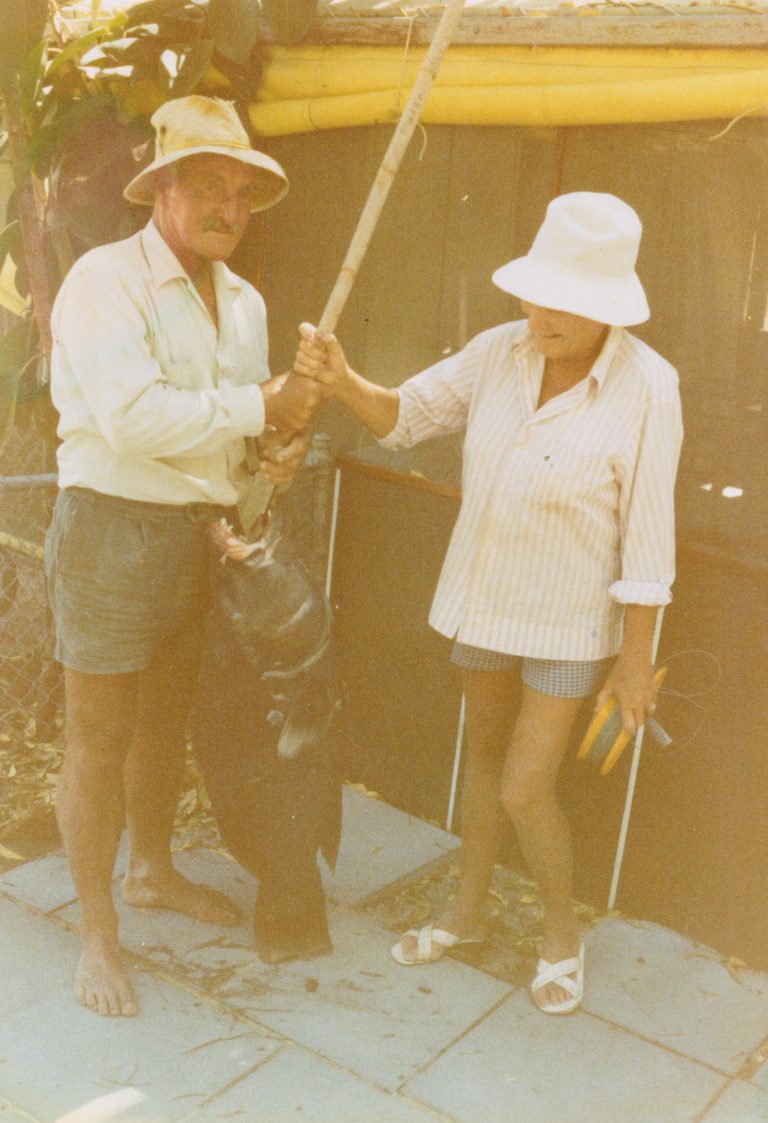
I’d intended to use bearded rock cod. Weather had affected the catch and it wasn’t available from the fisher that week. The Fair Seafood reference guide – which maps species to cooking method by texture – put bronze whaler in the same medium-firm column for poached and steamed. That’s the guide doing its job: when a planned species isn’t there, find what is and look across at the texture category rather than changing the dish.
Bronze whaler is not a species most home cooks reach for. It has enough body to hold against the richness of urchin butter and enough structure to stay intact through the cook. Centre-cut fillets only – tail fillets cook unevenly in a sealed parcel, the thin end overdone before the butter has worked through.
Why Quality Cannot Hide Here
Steam adds nothing to the fish. No caramelisation, no char. Off-flavours that high heat would mask become obvious. Gentle cooking reveals; it doesn’t compensate. Fair Seafood’s caught-yesterday, filleted-today model means the fish was in the water 48 to 72 hours before it reached the parcel. That freshness shows in a steamed fillet in a way it simply doesn’t when you’re searing at high heat – which is part of why traceable provenance and gentle cooking feel like the same philosophy.
The Flash Sear: Japanese Finish
When I steam fish that will go into a Japanese-influenced dish, the aromatics go into the vacuum bag: a thin slice of fresh ginger, a strip of yuzu peel, occasionally a smashed garlic clove. These infuse through the cook under pressure. By the time the bag opens, the fish has already taken on those notes subtly, from the inside out.
The flash sear that may follow. The fish comes out of the bag and is patted completely dry – surface moisture is the enemy of colour. A teppanyaki plate, cast iron or stainless-steel pan over high heat with avocado or peanut oil, both of which handle the temperature without smoking unpleasantly. Then a saikyo miso glaze: white miso, a touch of sugar, mirin, applied to the flesh side just before it hits the pan. Thirty to forty-five seconds. The goal is strictly colour, texture, and that toasted, caramelised aroma the miso produces under direct heat. The fish is already cooked. The sear adds nothing to the interior- only to the surface.
The result holds two different experiences at once: the silky, gentle interior that only steam produces, and a surface with colour and savoury depth that only direct heat can create. Steam and sear are not alternatives here – they are sequential, each doing what the other cannot.
The reheating principle follows the same logic: steamed fish back into the oven at 65-70°C for five to eight minutes returns to temperature without drying. Pan-seared fish reheated loses everything that made it worth cooking. Steamed fish reheated is still steamed fish.
What the Mouth-Feel Is Telling You
If you’ve spent years reading a pan-fried fillet – the visual cues at the edge, the resistance under a probe, the sound of the fish in hot oil – properly steamed fish will feel unfamiliar the first time. Not wrong. Unfamiliar. The softness is different. The flavour arrives more slowly because there is no caramelisation competing for your attention. It is almost like a well-made terrine – smooth, concentrated, with flavours that unfold gradually.
It’s not better than pan-fried fish. It’s a different thing – one that the Miele masterclass made visible to me in a way I hadn’t anticipated. Understanding what steam actually does, and at which temperature, gives you more tools. Sometimes you want the contrast of crispy skin against tender flesh. Sometimes you want the fish itself, unmediated, with butter and native herbs doing the quiet work inside a sealed parcel. Both are worth knowing. So is everything in between.
Simple food, honestly presented. The parcel opens at the table. The work is already done.
What’s your experience with steam oven cooking? Have you tried infusing aromatics under vacuum, or finishing steamed fish with a Japanese-style flash sear? Let me know below – I’d love to hear about your discoveries.
Follow my journey at @AncientGrains63 as I explore how temperature and time create textures that pan-frying simply cannot match.
#SteamOvenCooking #PrecisionCooking #AustralianSeafood #FairSeafood #UrchinButter #NativeHerbs #AdelaideFood #SustainableSeafood #FingerLime #LemonMyrtle #BronzeWhaler #MieleMasterclass #SaikyoMiso #YuzuPeel #JapaneseSeafood #VacuumSteaming