
The Wrong Size Glass | When the Problem Is the Vessel, Not What’s in It
There is a debate that has persisted for decades about whether a glass is half empty or half full. It is meant to reveal character – optimist or pessimist, grateful or ungrateful. I’ve never found it particularly useful. The framing assumes the glass is the right size. Most of the time, it isn’t.
Wine people have understood this for years. A Pinot Noir glass and a Champagne flute are both correct. They are not interchangeable, and neither is better than the other. The Pinot Noir glass is wide and open to let the wine breathe and release its aromatics. The Champagne flute is narrow to preserve the bead. Pour a Pinot Noir into a flute and something is lost – not because the wine has changed, but because the vessel was designed for something else. The glass isn’t wrong because of what you think about it. It’s wrong because of a mismatch between container and purpose.
That distinction – attitude versus design – is where the interesting question actually lives.
The Decision That Couldn’t Be Rushed
The health context for this piece starts in 2001, not as background but as the lived version of the principle. Three years of working through every available medical option, each one the wrong vessel for what the problem actually required. By early 2004, a seven-hour operation changed the outlook permanently – for the better. Someone said afterwards that I should have gone earlier. I understood what they meant, and they were wrong. You can’t just go to the supermarket for a new plumbing system. The decision needed its own timing, its own readiness, its own correctly sized vessel. Going earlier would have been forcing a Champagne flute onto a Pinot Noir.
From 2017 to now, it has been an operation roughly every six or seven months, followed by recovery, then the cycle again. I wish it were easier. It isn’t. But the orientation has remained consistent: find something positive to move toward, not something to manage or escape from. In hospital, I’d watch SBS Food. People found that strange. My explanation was simple – I needed something to look forward to. Not a distraction. A direction. There is a difference, and it matters more than it might appear.
The Mismatch Problem
What the health journey provided, over a long stretch, was a sustained opportunity to observe the difference between a perception problem and a design problem. Some of what I encountered was genuinely hard. Some of it looked hard but was actually a mismatch: the wrong vessel for the situation, not the wrong response to the situation.
The distinction changes what you do next. If the problem is attitude, the prescription is to think differently. If the problem is design, the prescription is to find a more appropriate vessel. One is internal work. The other is practical problem-solving. Conflating them wastes energy on the wrong solution, and that is a cost worth avoiding.
The Kitchen Makes This Concrete
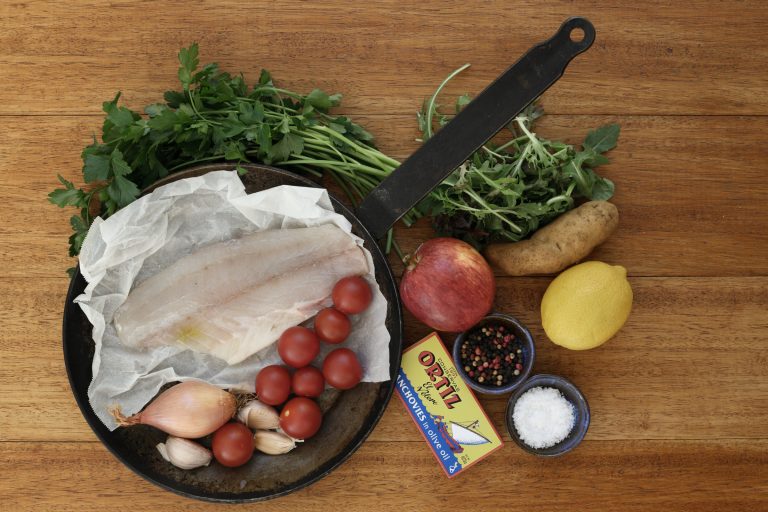
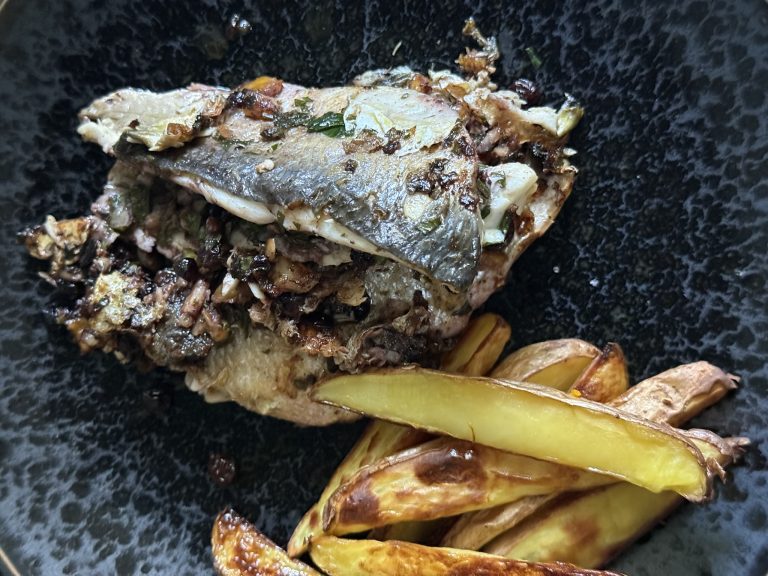
Cooking offers feedback immediately, without sentiment, which makes it a reliable testing ground. The bread that didn’t rise: frustrating to attribute to personal failure, clarifying to recognise as a tin too large for the dough quantity. The flathead that fell apart: not a technique failure but a fish slice too wide for the fillet and a pan without enough clearance to manoeuvre. The curry that was flat: not a deficiency of effort but the wrong pot, too wide, not enough depth for the liquid to build into the sauce it needed to become.
In each case the cook did nothing wrong. The vessel was wrong. Recognising that is not an excuse – it’s an accurate diagnosis, which is the only starting point for actually improving. The half-empty/half-full debate would have you examining your attitude toward the curry. The wrong-size-glass reframe asks a different question: is this the right vessel for what you’re trying to do?
The Chamomile Principle
A cup of chamomile tea at the end of a difficult day does something that the situation around it cannot undo. The tea is not fighting the difficulty. It is a small, correctly sized vessel for the specific thing it does: warmth, something mild, a pause. It doesn’t claim to be more than it is. It doesn’t need to be. Correctly sized for purpose.
That applies more broadly than tea. Not everything requires the large vessel. Some situations call for the small one – the pause, the specific warmth, the appropriately contained response rather than the comprehensive one. Over-responding to something that needed a chamomile moment is also a mismatch. Sometimes the glass was too large, not too small.
Find the Right Size Glass
The half-empty/half-full question is about your relationship to what you have. The wrong-size-glass question is about whether the design of the situation itself is the source of the difficulty. Often it is. The fish is dry not because you cooked badly but because the method was wrong for that species. The surgery decision wasn’t delayed because of fear or avoidance – the vessel wasn’t ready. The direction of attention in a hospital bed isn’t strange when you understand it as orientation rather than distraction.
Does it make sense? Yes or no, not a maybe.
Find the right size glass.
Follow my journey at AncientGrains63 as I find the principle underneath the everyday.
AncientGrains63 #TheWrongSizeGlass #LifeObservations #Perspective #Controllable #FoodPhilosophy #ag63au