
Steady Heat | Baking Fish for Scale, Versatility and the Flavours You Actually Want
I’ve always thought baking gets overlooked when people talk about cooking fish. Everyone rushes to the pan-sear, chasing that restaurant-style crust and the drama of high heat. But here’s what I’ve learnt: baking is actually the most versatile way to cook fish, especially when you’re feeding more than two people or want to try different flavour profiles without switching techniques.
The oven gives you options. You can roast a whole barramundi for a celebration table, bake individual fillets wrapped in parchment for a Tuesday dinner, or build a proper fish pie that feeds six. You can go Mediterranean with tomatoes and olives, or Thai with lemongrass and coconut. The technique stays consistent – it’s the flavours that shift. That’s the kind of cooking I’m drawn to: foundational methods that work across cuisines without requiring you to relearn everything each time.
The Case for Steady Heat
Baking gives you even, all-around heat without the vigilance that stovetop cooking demands. I can prepare a tray, slide it into a preheated oven at 175°C fan-forced, and know I’ve got fifteen to twenty minutes to set the table, finish a salad, or have a conversation with whoever’s in the kitchen. The fish cooks gently. That’s precisely what you want for species like coral trout, nannygai, barramundi, snapper, or Ōra King salmon – all of them respond to this steady approach with texture and flavour that high-heat methods can work against.
Scale is the other argument. The teppanyaki plate and a good heavy pan are my go-to for weeknight dinners – quick, responsive, perfect for two. But when I’m cooking for a group, the oven changes the equation entirely. A roasting tray handles six portions with ease. A whole side of Ōra King salmon serves ten. When I’m cooking for family and people, I want to sit with rather than perform for, the oven makes that possible.
Where I Source the Fish
The fish I bake almost exclusively comes from Fair Seafood – Australia’s only fisher-to-consumer fully traceable seafood supplier. Baking is a gentle technique: it won’t rescue inferior fish and it won’t mask handling that wasn’t careful. When I pick up nannygai or trevally or ling from Fair Seafood, knowing exactly who caught it, where, and when gives me confidence before the fish ever meets the oven. Most of what I’m cooking arrived from the water within 48-72 hours, and that shows.
Temperature, Time, and the Finish
If I have time, I’ll dry-age the fish overnight in the fridge, uncovered on the lowest shelf – the coldest part. This draws out surface moisture, which means cleaner flavour and better texture when it cooks. The fish goes in drier, comes out with more concentrated character. If your fish is genuinely fresh it will not smell. It’s become standard practice whenever I’m planning ahead.
My standard for most baked fish is 175°C fan-forced. For thick individual fillets 3-4cm that means twelve to fifteen minutes. A larger piece or a whole side needs twenty to twenty-five. For the last two to three minutes, I might switch to fan/grill mode. That blast of top heat crisps the skin without overcooking the flesh underneath – it’s the oven’s equivalent of that final sear, and it finishes the fish with the kind of skin texture that keeps people coming back for seconds.
The rest matters too: three minutes under foil after the fish comes out, during which carryover cooking does its work quietly. That rest redistributes the juices and relaxes the proteins. Skip it and you lose moisture and tenderness in the final mouthful.
Those flavour directions extend further than Mediterranean and Thai. North African with harissa, preserved lemon, and coriander. Japanese with white miso, mirin, spring onion, and sesame. The technique doesn’t change. The aromatic base does – and the oven accommodates whatever direction you choose without requiring you to relearn the approach.
The Paper Envelope and What Comes After It
Fish en papillote is where I’d point anyone just wanting to explore with baked fish. I’ll wrap individual portions – barramundi, coral trout, gurnard, flathead – with herbs, citrus, a splash of stock or wine, seal the edges tightly, and bake at 180°C for twelve to fifteen minutes. The paper traps steam. The fish essentially poaches in its own juices while absorbing whatever aromatics you’ve included. Each person gets their own parcel, opened at the table – that burst of steam and scent is genuine rather than manufactured. It’s real technique that happens to create a moment.
The combi oven takes that same principle and gives you precise control over it. A combi oven or my steam oven, set to around 70°C with steam injected at intervals, creates a cooking environment that papillote can only approximate. The moisture surrounds the fish completely and evenly, preventing the surface from drying before the centre is done. Ling, flathead, and kingfish emerge with an edge-to-edge uniformity – silky, clean, with the fish’s own flavour concentrated rather than diluted. Without a combi or steam oven, papillote is the home cook’s answer to the same problem; with one, the steam function should be your first stop for any delicate species.
Even a conventional oven gets you part of the way there. A shallow pan of simmering water on the lower rack, fish on the rack above, oven at 160°C – it’s improvised steam, rougher than a combi, but meaningfully better than dry heat for species that need gentleness.
When Baking Becomes a Statement
Baking a whole fish changes the nature of the meal. A whole barramundi or snapper, seasoned simply and roasted, becomes a centrepiece – something family can gather around rather than receive as a plated portion. There’s a generosity in that style of service. It suits the way I actually want to eat and host.
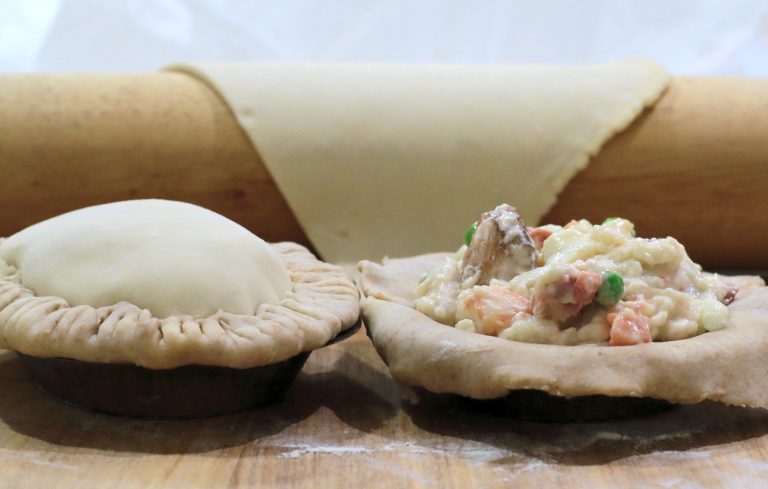
The same principle extends to a fish pie. Flathead and ling, flaked through a simple béchamel with peas and herbs, topped with mashed potato, baked at 180°C for thirty to thirty-five minutes until golden – this is comfort food that happens to be elegant. I’ve done it with smoked fish folded through for depth, and it feeds a crowd.
The more ambitious version: a whole side of Ōra King salmon with sourdough stuffing and verjuice hollandaise. This is not complicated food. It is careful food, well-sourced, properly prepared, rested, and finished with restraint. The oven does most of the work.
Learning to Let the Oven Work
Baking has changed something in how I think about fish at home. It has removed the pressure to perform: the constant adjustment, the timing anxiety, the singular focus demanded by a hot pan. Instead, I prepare thoughtfully, set things up properly, and let the oven provide what it does best – steady, even heat that coaxes flavour rather than forces it.
That patience has transferred. I find myself bringing the same disposition to other parts of cooking – the willingness to step back, stop fussing, and trust that what I’ve set in motion is working. It’s a habit the oven teaches if you let it.
If you’ve been hesitant about baking fish, or if you’ve only ever pan-seared, I’d encourage you to give the oven a try. Start with something forgiving – nannygai, coral trout or barramundi, seasoned simply, at 175°C fan-forced, with the fan/grill on for the final few minutes. Rest for three minutes. See what happens. You might find, as I have, that the oven is less an obstacle than it first appears – patient, reliable, and more versatile than the drama of the pan ever suggested.
What’s your go-to method for cooking fish at home? Have you tried baking a whole barramundi or snapper for family or a group of friends? Which flavour direction do you tend toward – Mediterranean, Thai, or something else entirely? Have you used a combi oven or Steam oven for fish? Let me know below – I’d love to hear about your discoveries with baked fish.
Follow my journey at @AncientGrains63 as I explore how proper technique and temperature control can transform traceable Australian seafood into meals worth gathering around.